
BEFORE THE FIRST SHOT
By Criminolohenyo · August 12, 2026
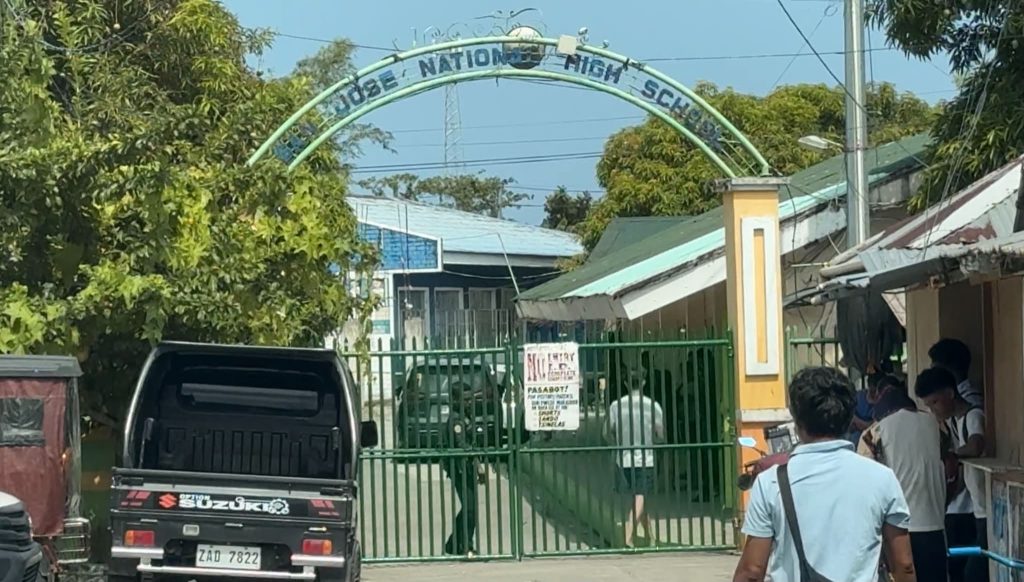
Why Teachers and Schools Must Think Proactively About School Shootings
School shooting incidents, kaya ba talaga itong mapigilan kahit may mga kapulisan na naka-deploy?
Posibleng oo. Posibleng hindi.
When conversations about school shootings begin, one of the first solutions usually proposed is simple: dagdagan ang security. Maglagay ng pulis. Higpitan ang gate. Mag-conduct ng active shooter drill.
These measures are important. But they raise a more fundamental question:
Why should our security strategy begin only when the attacker is already at the gate, or when the first shot has already been fired?
That is the difference between reactive security and proactive security.
And if we genuinely want safer schools, we need both.
The Police Cannot Be Everywhere
The presence of law enforcement can deter crime and dramatically improve emergency response. School guards, police officers, CCTV systems, access controls, and emergency protocols all have legitimate roles in protecting a campus.
But there is an operational reality we must acknowledge:
No police officer or security guard can observe every student, classroom, hallway, conversation, online interaction, and behavioral change at all times.
A police officer stationed outside a school may respond quickly to an attack.
A security guard may stop an unauthorized person at the entrance.
But who spends hours every day inside the classroom with students?
The teacher.
Who notices that a normally sociable student suddenly becomes withdrawn?
Who may hear disturbing statements disguised as jokes?
Who notices escalating conflicts between students?
Who sees changes in academic performance, attendance, behavior, peer relationships, or emotional regulation?
Very often, it is not the police.
It is the teacher.
This does not mean teachers should become police officers, investigators, or amateur psychologists. They should not interrogate students, conduct searches outside school policy, or diagnose someone as potentially violent.
It means something much simpler:
Teachers are often among the first people capable of noticing that something has changed.
That makes them an important part of the first line of prevention.
Reactive Security vs. Proactive Security
Imagine that an armed attacker has already entered a school.
The alarm sounds.
Teachers lock their classrooms. Students follow emergency procedures. Security personnel respond. Police units arrive.
At this stage, we are dealing with response.
The objective is now to minimize casualties, protect students, contain the threat, and stop the attacker.
Active shooter drills are designed primarily for this stage.
They answer the question:
"What should we do if an attack happens?"
That is necessary.
But proactive security asks a different question:
"What could we have done before the attack happened?"
That question changes everything.
Instead of concentrating exclusively on the minutes during an attack, prevention examines the days, weeks, or months preceding it.
Were warning behaviors observed?
Was someone threatening another student?
Were there credible communications suggesting violence?
Was there escalating aggression?
Did somebody report concerning behavior?
If something was reported, was it properly assessed?
Did different offices possess separate pieces of information that were never connected?
Could intervention have occurred earlier?
The goal is not prediction.
The goal is early recognition, assessment, communication, and intervention.
Active Shooter Drills Are Important, But They Are Not Enough
Schools conduct fire drills because fires are dangerous.
We conduct earthquake drills because earthquakes can kill.
Similarly, preparing students and personnel for an armed attack can improve emergency readiness.
But there is a danger when preparedness becomes nothing more than compliance.
Conduct SIMEX.
Take pictures.
Prepare documentation.
Submit the accomplishment report.
Done.
That should never be the objective.
A drill should test whether people actually understand the emergency system: communication, evacuation or lockdown procedures, accountability, reunification, coordination, command structure, and emergency response.
More importantly, drills should exist within a much broader school safety and violence-prevention program.
Because surviving an attack is important.
Preventing the attack from occurring is better.
Teachers as the Eyes and Ears of Prevention
Teachers occupy a unique position in school security because they interact directly with students.
This is why security awareness should become part of professional preparedness.
A teacher does not need to become suspicious of every student.
In fact, that would be counterproductive.
A quiet student is not automatically dangerous.
A student experiencing emotional difficulty is not automatically violent.
A student interested in weapons, violent games, or dark subjects should not automatically be labeled a threat.
Behavior must be understood in context.
What should concern us are credible patterns, escalation, combinations of warning behaviors, direct or indirect threats, or circumstances suggesting that someone may be moving toward violence.
The teacher's responsibility is therefore not to declare:
"This student will become a shooter."
The appropriate response is:
"This behavior concerns me. I should document what I actually observed and report it through the proper school mechanism so qualified personnel can assess it."
That distinction is critical.
Observation is not accusation.
Reporting is not conviction.
Concern is not diagnosis.
From "See Something, Say Something" to "Know What Happens Next"
Schools frequently tell students:
"If you see something, say something."
Good advice.
But what happens after somebody says something?
Suppose a student tells a teacher:
"Ma'am, may sinabi po siyang gagawin niya sa school bukas."
What happens next?
Does the teacher know whom to contact?
Guidance office?
Principal?
School security?
DRRM coordinator?
Parents?
Police?
What information should be documented?
Who determines whether the threat is credible?
Who follows up?
Who ensures the report does not simply disappear into an office logbook?
A reporting system without an assessment and response mechanism creates a dangerous illusion of security.
Schools therefore need a clearly defined threat reporting and assessment pathway.
Information should reach the appropriate trained personnel who can evaluate the situation, coordinate intervention, and involve law enforcement or other professionals when circumstances require it.
This is where multidisciplinary cooperation becomes essential.
School Security Is an Ecosystem
School safety should never depend on a single person standing at the gate.
Think of security as layers.
The security guard observes physical access.
Teachers observe classroom behavior.
Guidance personnel can assess psychosocial concerns within their professional role.
Administrators coordinate institutional decisions.
DRRM personnel strengthen emergency preparedness.
Parents may notice behavioral changes at home.
Students often know what is happening within their peer groups before adults do.
Student Government, Scouts, campus organizations, and student leaders can strengthen safety awareness and responsible reporting.
Law enforcement provides professional security intervention, investigation, intelligence coordination, and emergency response when appropriate.
Each sees a different part of the picture.
The failure occurs when these pieces remain isolated.
A teacher knows something.
A classmate knows something else.
Guidance has another concern.
Security recorded an incident.
Administration received another report.
Yet nobody connects them.
Effective prevention requires communication, documentation, assessment, and coordination.
School Security Starts Before the School Gate
We also need to abandon the idea that school security begins at the entrance.
Threats can develop outside school grounds.
Conflict can begin in group chats.
Bullying can continue online after classes.
Threatening statements can appear on social media.
Personal grievances can escalate outside campus.
Students can encounter extremist, violent, or harmful online communities.
This means modern school safety requires a broader understanding of the security environment.
Again, this does not justify indiscriminate surveillance of students or invasion of their privacy.
There must always be respect for rights, due process, school policies, and applicable laws.
Proactive security is not about treating every student as a suspect.
It is about creating a community capable of recognizing and responsibly communicating credible safety concerns.
We Need to Change the Question
After a tragedy, people naturally ask:
"Nasaan ang security?"
"Bakit hindi agad nakapasok ang police?"
"Bakit walang nakapigil?"
Those questions are legitimate.
But there is another question that should be asked much earlier:
"Were there opportunities to intervene before this became an emergency?"
That is the mindset we need to develop.
We should not measure school security solely by how quickly police can respond after violence begins.
We should also measure it by how effectively the school identifies concerns, encourages reporting, assesses threats, supports vulnerable students, resolves conflicts, controls access, communicates information, and intervenes before a situation escalates.
The Teacher as the First Line of Defense
When we say teachers can be part of the first line of defense, we are not asking them to confront an armed attacker.
That distinction must be absolutely clear.
During an actual armed attack, teachers should follow established emergency protocols and prioritize the protection of themselves and their students. They should not attempt to perform police functions.
Their most powerful defensive role often happens before the emergency exists.
It happens when a teacher listens.
When a teacher observes.
When a teacher takes a concerning statement seriously.
When a teacher documents facts instead of spreading rumors.
When a teacher knows the reporting protocol.
When a teacher communicates with the appropriate office.
When a teacher develops trust so that students are comfortable reporting legitimate concerns.
When a teacher understands that security awareness is also part of protecting the learning environment.
That is proactive security.
And perhaps one of the most important lessons in crime prevention is this:
You do not have to wait for a crime before you begin preventing it.
Police officers remain indispensable.
Security personnel remain indispensable.
Emergency drills remain indispensable.
But none of them should become our only strategy.
A genuinely safe school combines prevention, preparedness, protection, response, and recovery.
It involves administrators, teachers, guidance personnel, DRRM teams, security officers, law enforcement, parents, student organizations, and most importantly, students themselves.
Because sometimes the information capable of preventing a tragedy does not first appear on a CCTV monitor.
It appears in a classroom.
In a conversation.
In a behavioral change.
In a message.
In something somebody noticed but initially thought was too small to report.
And that is why school security must begin long before an emergency alarm sounds.
Before the First Shot
We cannot promise that every school shooting or violent incident can be prevented.
Security professionals should never make that promise.
Human behavior is complex, and no prevention system is perfect.
But uncertainty is not an excuse for waiting.
We can strengthen awareness.
We can establish reporting mechanisms.
We can train teachers and students.
We can improve threat assessment.
We can strengthen access control.
We can build coordination between schools and law enforcement.
We can conduct meaningful drills.
We can intervene earlier.
And we can build a culture where safety is something practiced every day, not something remembered only after tragedy strikes.
Because ultimately:
Crime prevention begins long before the first shot is fired.
The strongest school security system is not simply the one capable of responding quickly when an attacker enters the campus.
It is the school community capable of recognizing danger, communicating concern, and taking responsible action while there is still time to prevent the attack from happening.
PHOTO CREDITS TO: Philippine Information Agency (PIA)